Bob Hoover Obituary, Death – Legendary Aviator and Airshow Pioneer Remembered 10 Years After His Passing
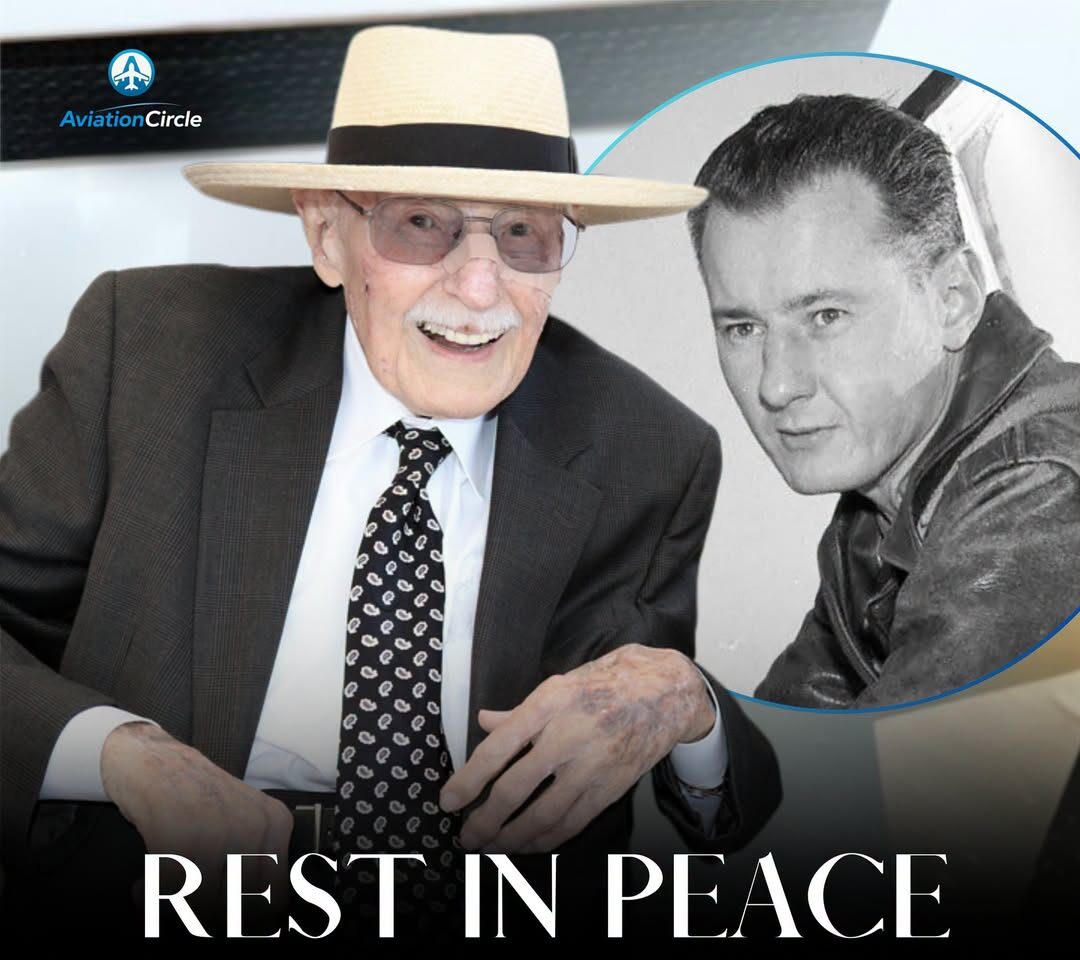
Bob Hoover, widely regarded as one of the greatest pilots in aviation history, died on October 25, 2016, at the age of 94. Ten years after his passing, his extraordinary career continues to inspire pilots, aviation enthusiasts and generations of people who admired his precision, courage and remarkable command of an aircraft.
Hoover’s life was filled with experiences that seemed almost impossible to believe, from escaping a German prisoner-of-war camp during World War II to becoming a celebrated test pilot and one of the most admired performers in the airshow world. His achievements helped establish him as a legendary figure whose influence extended far beyond the cockpit.
His story was not simply about daring manoeuvres or spectacular performances. It was also about persistence, ingenuity and a lifelong determination to push the limits of what a skilled pilot could accomplish.
Bob Hoover’s Early Passion for Flying
Hoover’s fascination with aviation began when he was a teenager in Nashville, Tennessee. While working at a grocery store, he used his earnings to pay for flying lessons without first asking his mother.
Learning to fly did not come without challenges. Hoover initially experienced airsickness, but rather than allowing it to end his ambitions, he continued practising. He taught himself aerobatic manoeuvres, including loops, rolls and spins, until he adapted to the physical sensations of flying.
His determination helped transform an early obstacle into an opportunity to develop exceptional skills. The discipline he demonstrated as a young pilot would become a defining feature of his career.
Hoover also encountered difficulties when he attempted to enter military aviation. His eyesight did not meet the Army’s standard during an examination. According to the story often told about his life, he memorized the bottom line of the eye chart while the doctor was briefly away and then passed the test.
The episode became part of Hoover’s remarkable personal history, illustrating the resourcefulness and determination that would repeatedly appear throughout his life.
Captured During World War II and a Daring Escape
During World War II, Hoover served as a fighter pilot. In 1944, on his 59th mission, his Spitfire was shot down off the coast of southern France, and he was captured by German forces.
He was imprisoned at Stalag Luft I, a German prisoner-of-war camp for captured Allied airmen. Hoover spent more than a year in captivity, facing circumstances that were a world away from the freedom and exhilaration he associated with flying.
In 1945, Hoover managed an extraordinary escape. Fellow prisoners created a distraction by staging a fight, giving him an opportunity to climb over the camp’s barbed-wire perimeter.
After reaching an airfield, he discovered a damaged German Focke-Wulf Fw 190 fighter with fuel remaining in its tank. Despite having no map, he decided to use the aircraft to escape occupied territory.
Hoover later recalled relying on the coastline to guide him westward, believing that seeing windmills would indicate he had reached a safer area. He eventually landed in a field in the Netherlands.
The escape became one of the most extraordinary episodes of his life. It demonstrated the combination of aviation expertise, quick thinking and nerve that would later define his reputation.
From Test Pilot to Aviation History
After returning home, Hoover built a distinguished career as a test pilot. He became associated with Chuck Yeager during the development of experimental aircraft connected to the United States’ early supersonic flight programme.
In 1947, when Yeager broke the sound barrier in the Bell X-1, Hoover flew the chase aircraft. The achievement marked a historic turning point in aviation and placed Hoover among the pilots working at the forefront of flight research during a transformative period.
His experience as a military pilot and test aviator gave him an exceptional understanding of aircraft performance and control. He developed a reputation for handling difficult flying conditions with extraordinary precision, earning respect from fellow pilots and aviation leaders.
Among those who praised his ability was legendary aviator Jimmy Doolittle, who described Hoover as “the greatest stick-and-rudder man who ever lived.” The remark captured the admiration he inspired among people who understood the extraordinary demands of controlling an aircraft.
Bob Hoover’s Legendary Airshow Performances
Hoover later became one of the most celebrated airshow performers in the world. His demonstrations combined technical mastery with a level of control that often left audiences astonished.
One of his signature performances involved a twin-engine Shrike Commander. Hoover would shut down both engines before performing carefully controlled aerobatic manoeuvres, including loops and rolls. He would then bring the aircraft down with remarkable precision, touching one wheel at a time before rolling to a stop in front of the crowd.
After landing, he would step out wearing a business suit and wave his straw hat to the audience, creating an unforgettable contrast between the intensity of the performance and his relaxed appearance.
Another famous demonstration involved pouring iced tea into a glass while rolling the aircraft without spilling it. The manoeuvre became a memorable illustration of the smoothness and precision that distinguished his flying.
These performances were not simply spectacles. They demonstrated Hoover’s deep understanding of aircraft behaviour, energy management and control. His ability to make difficult manoeuvres appear effortless helped establish his status as an aviation icon.
The FAA Dispute and His Return to the Cockpit
Hoover’s career also included a difficult dispute with the Federal Aviation Administration. In 1992, two FAA inspectors raised concerns about his flying during an airshow, and the agency withdrew his medical certificate, preventing him from flying.
Hoover challenged the decision. Video footage, eyewitness accounts and an FAA-appointed doctor were cited in support of his position, but the dispute continued for several years.
In 1995, at the age of 73, Hoover regained his medical certificate. His return was a significant moment for the veteran pilot, who had spent much of his life demonstrating his extraordinary abilities in the air.
The episode became another chapter in a career marked by both remarkable achievements and personal challenges. For his supporters, the eventual restoration of his flying privileges represented the return of a pilot whose skill and experience had earned widespread admiration.
Honours and a Lasting Aviation Legacy
Hoover’s influence extended across military and civilian aviation. The Blue Angels, the U.S. Navy’s flight demonstration team, the U.S. Air Force Thunderbirds and Canada’s Snowbirds all recognized him as an honorary member.
His achievements have also been preserved through aviation history collections. His Shrike Commander is displayed at the Smithsonian’s National Air and Space Museum, with a bronze statue of Hoover nearby commemorating his contribution to flight.
These honours reflect the respect he earned from professional pilots, aviation organizations and the public. His career connected several important eras of aviation, from World War II fighter operations to experimental supersonic flight and modern airshow performance.
Hoover also shared a straightforward message with aspiring pilots: “Don’t let anybody tell you you can’t do it.” The advice reflected the determination that had carried him through setbacks, captivity and decades of demanding flying.
Remembering Bob Hoover
Bob Hoover died on October 25, 2016, at the age of 94. A decade later, his story remains one of the most remarkable in aviation, defined by courage under pressure, technical brilliance and an unwavering passion for flying.
From his teenage flying lessons in Nashville to his daring escape during World War II, his work as a test pilot and his legendary airshow performances, Hoover built a legacy few aviators could match.
He showed audiences what exceptional skill could achieve and inspired countless people to pursue their own ambitions despite obstacles. His life remains a reminder that determination, experience and confidence can transform extraordinary challenges into lasting accomplishments.
Ten years after his death, Bob Hoover continues to be remembered as a pioneer, a master pilot and an enduring symbol of aviation excellence. His remarkable journey lives on through the history he helped shape and the generations of aviators who continue to draw inspiration from his example.